Quick answer: Cooling cooked potatoes significantly lowers their glycemic index by converting starches into resistant starch. For instance, boiled red potatoes drop from a high glycemic index of 89 when hot to a medium index of 56 when cold. Adding an acidic dressing to chilled potatoes lowers the glycemic index even further.
Cooling cooked potatoes changes their starch structure into resistant starch, which your body digests more slowly, leading to a significantly lower blood sugar spike. This guide explains the science behind resistant starch, how much it lowers the glycemic impact, and practical ways to prepare potatoes for better blood sugar management.
What Happens to Potatoes When You Cool Them?
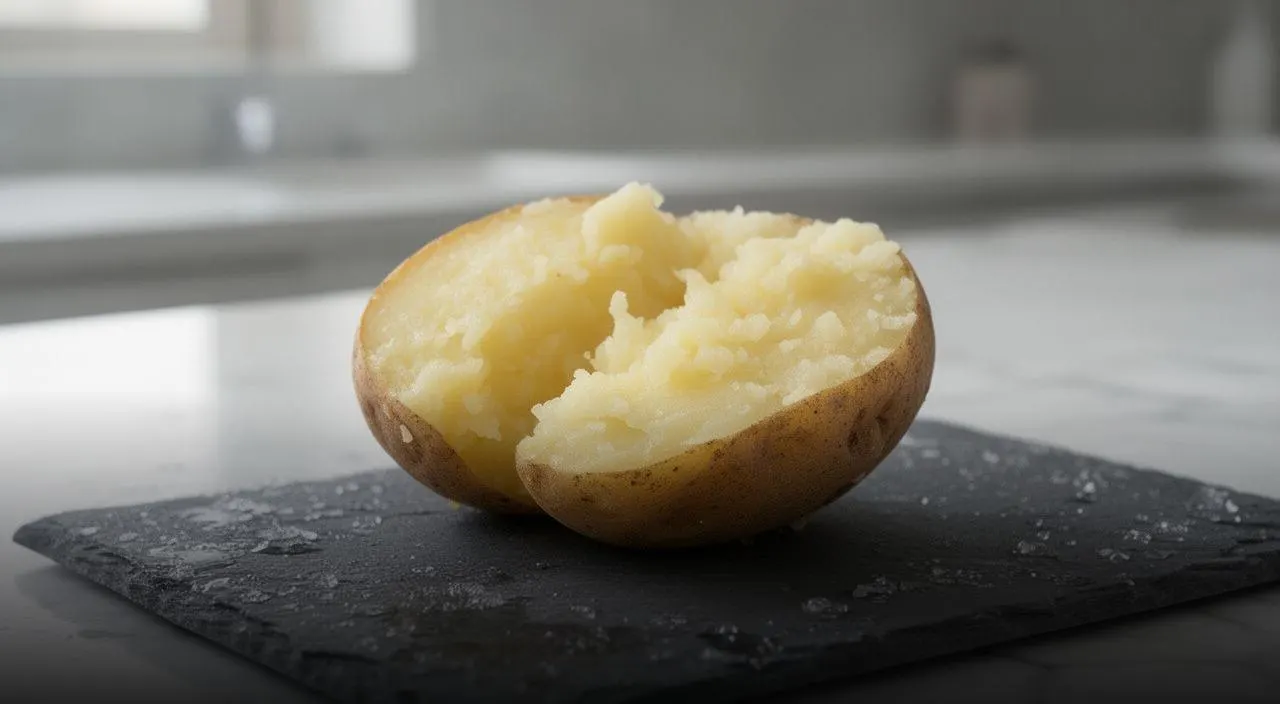
When you heat potatoes, their starches gelatinize, making them easy for your body to break down into glucose. However, when you let those cooked potatoes cool down, a process called starch retrogradation occurs. During this cooling phase, some of the starches lose their original structure and form a new, crystallized structure.
As explained in nutritional research, "the new structure is resistant to digestion and leads to health benefits". This newly formed resistant starch acts similarly to soluble fiber. Because your gut enzymes cannot easily break it down, it passes through your digestive system more slowly, resulting in a slower, more gradual release of glucose into your bloodstream rather than a rapid spike.
How Much Does Cooling Lower the Glycemic Impact?
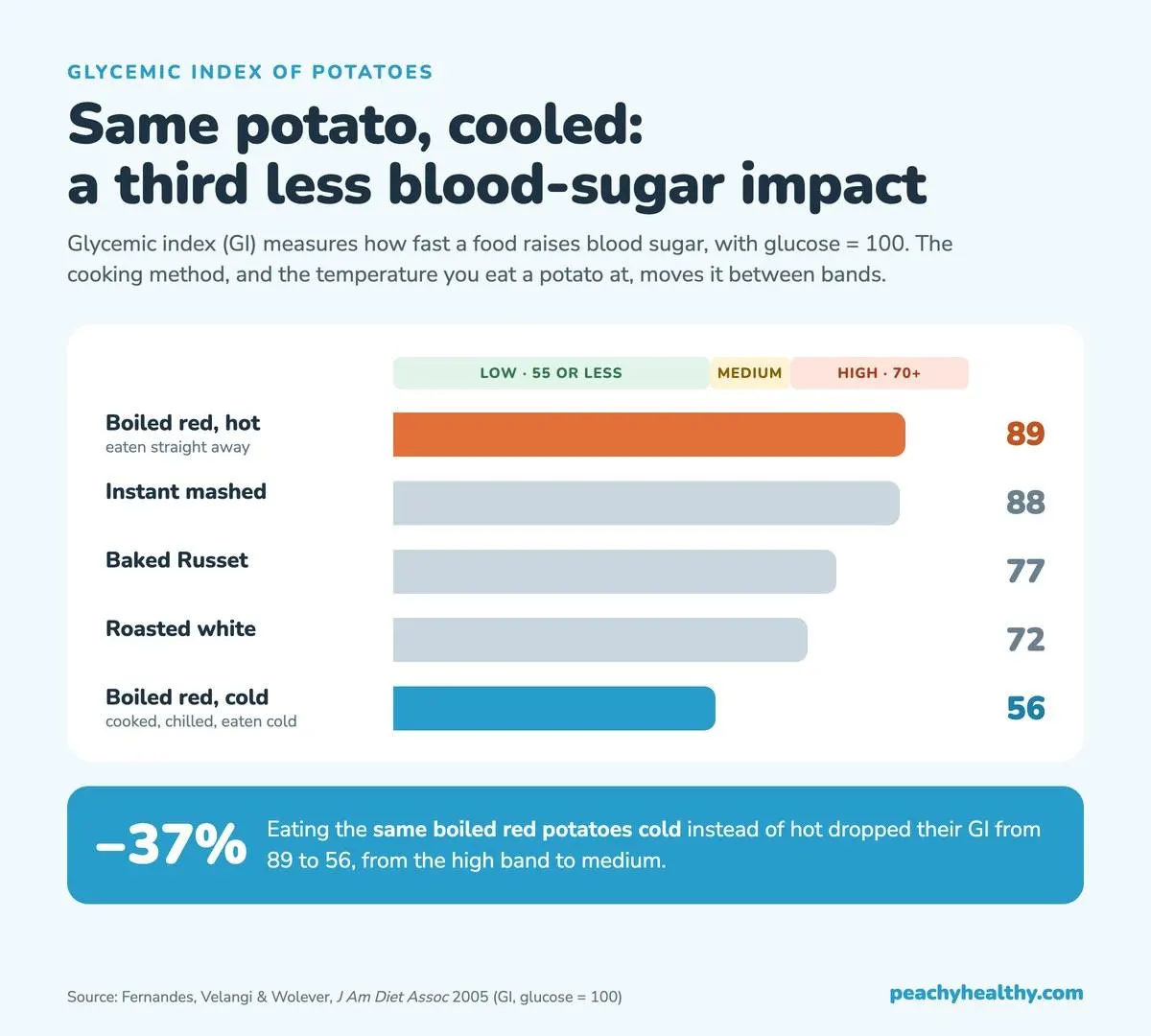
The difference is large enough to measure. In a study of potatoes commonly eaten in North America, boiled red potatoes had a glycemic index of 89 when eaten hot but 56 when eaten cold, roughly 37% lower, moving them from the high to the medium band. The same study found that precooked, refrigerated and reheated Russet potatoes raised blood sugar less than Russets cooked and eaten straight away, and its authors advise people who want a lower-GI diet to precook potatoes and eat them cold or reheated.
In a clinical study of women with raised fasting glucose and insulin, eating baked-then-chilled potatoes instead of freshly boiled ones lowered blood glucose by 9.2% and insulin by 22.6% at the 30-minute mark. The women did not report feeling any fuller, so the benefit is to blood sugar rather than appetite.
Does Cooling Potatoes Make Them Healthier Overall?
Potatoes are a whole food with real nutrients. Harvard’s Nutrition Source notes that a potato contains about 600 mg of potassium, some of which is lost in boiling, along with vitamin C and around 2 to 3 grams of fibre in a medium potato with its skin, most of it in the peel.
How they are cooked matters most. In the research Harvard summarises, French fries stand out: in a 2025 study, every three servings of French fries a week raised the risk of type 2 diabetes by 20%, while potatoes cooked in other ways did not appear to increase risk. The picture for blood pressure is less clear-cut, since one large study linked higher intakes of baked, boiled or mashed potatoes to hypertension as well, and swapping one daily serving for non-starchy vegetables lowered that risk.
Cooling helps because, as Harvard puts it, boiling and then cooling potatoes increases their resistant starch, which "will tend to reduce the glycemic load". Cooling is a useful tweak, not a licence to eat unlimited potatoes. If you have diabetes or another metabolic condition, talk to your doctor or a registered dietitian before changing your diet.
What Is the Lowest Glycemic Index Way to Cook Potatoes?
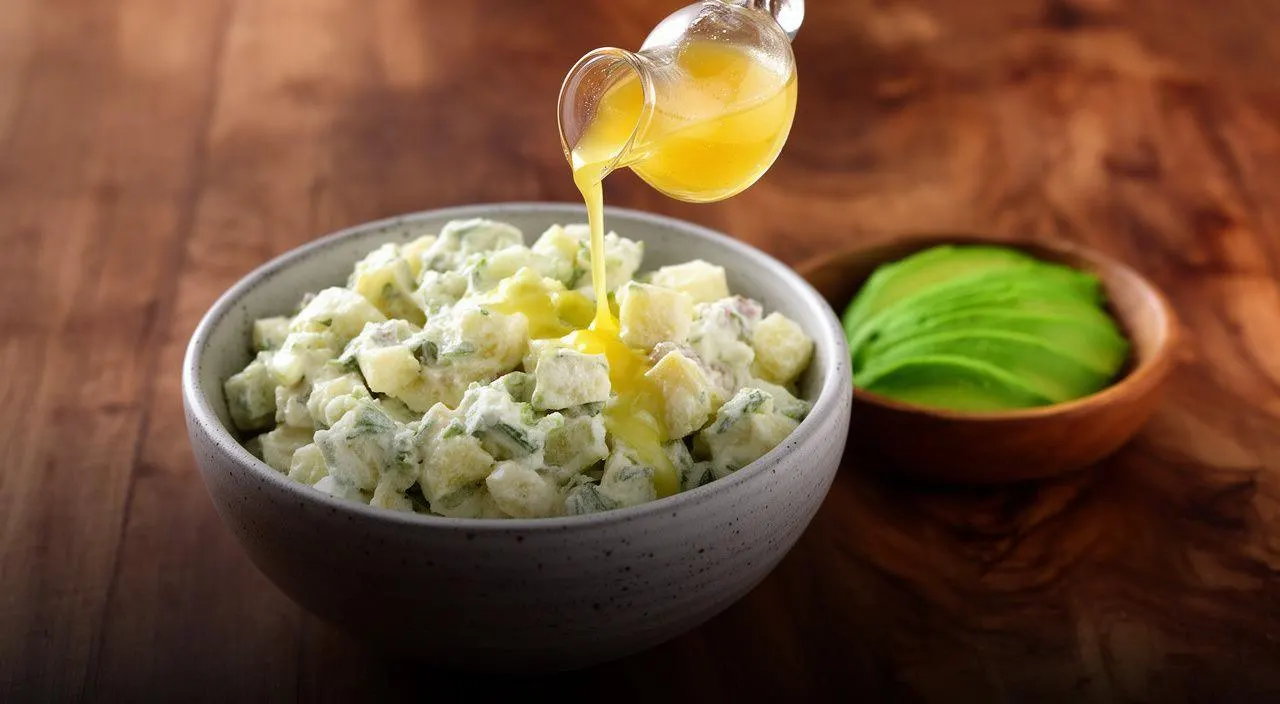
AI illustration · Peachy Healthy
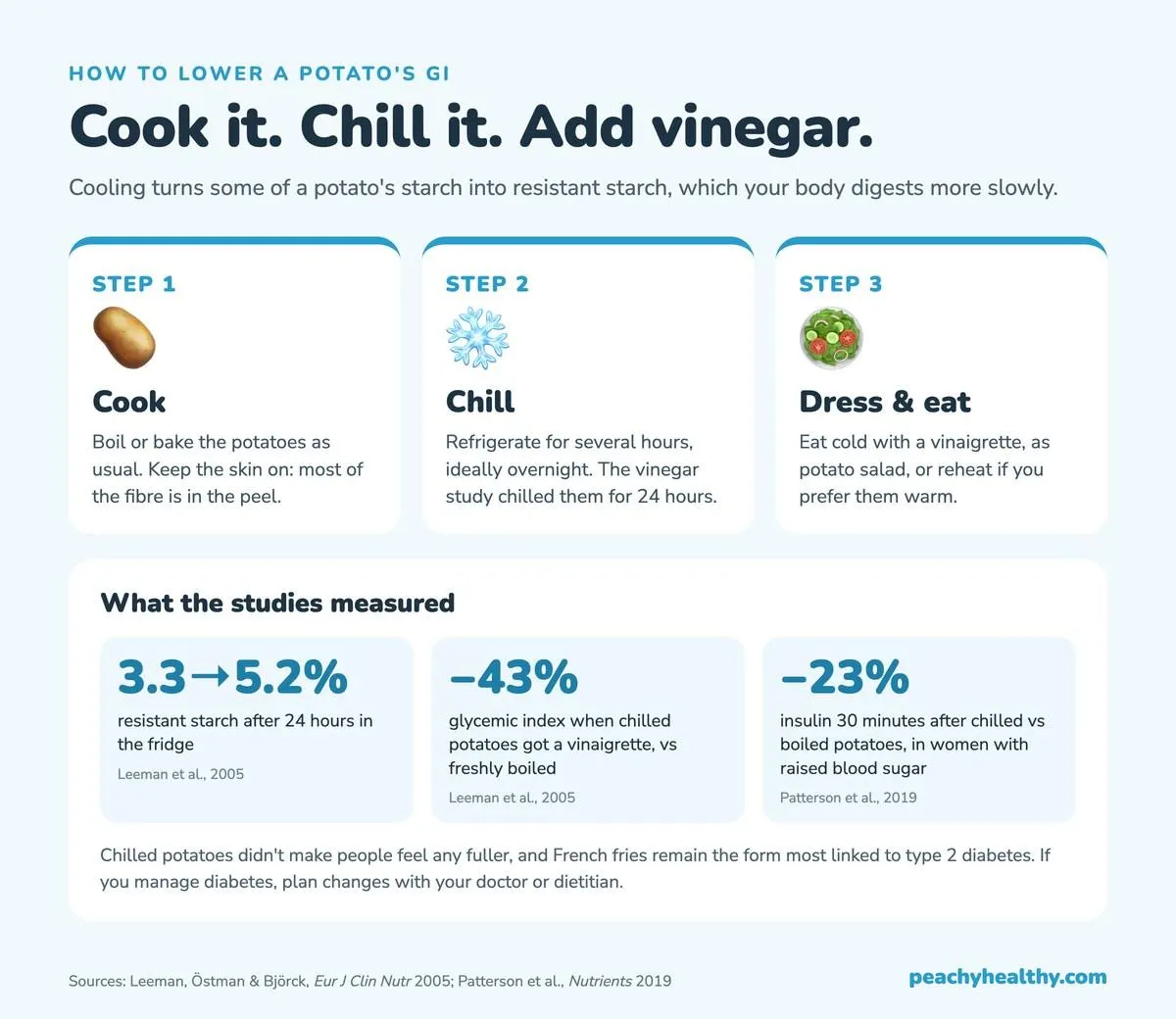
Cook, then chill. Boiling or baking potatoes and refrigerating them before eating gives the lowest glycemic response in the studies above, and an acidic dressing lowers it further. In a Swedish study, boiled potatoes stored in the fridge for 24 hours and served with a vinaigrette had a 43% lower glycemic index and a 31% lower insulin index than freshly boiled potatoes. Cold storage alone raised resistant starch from 3.3% to 5.2% of the starch and cut the insulin response by 28%.
Here is how the main preparation methods compare in the research:
| Preparation method | Glycemic impact | What the research found |
|---|---|---|
| Boiled, eaten hot | High | Boiled red potatoes: GI 89 (Fernandes et al., 2005) |
| Boiled, eaten cold | Medium | The same potatoes eaten cold: GI 56, about 37% lower |
| Boiled, chilled 24 h, with vinaigrette | Lowest tested | GI 43% lower and insulin 31% lower than freshly boiled (Leeman et al., 2005) |
| Precooked, chilled and reheated | Lower for Russets | Russets raised blood sugar less than freshly cooked; no difference was seen for boiled white potatoes (Fernandes et al., 2005) |
| French fries | High, and linked to diabetes risk | Each 3 servings a week linked to 20% higher type 2 diabetes risk (Harvard Nutrition Source) |
How Can You Eat Aloo Gosht Without a Big Blood Sugar Spike?
Aloo gosht, meat slow-cooked with potatoes in a spiced gravy, is a staple across Pakistan, India and Bangladesh, usually eaten with rice, roti or naan. It matters to get it right: according to Diabetes UK, type 2 diabetes is two to four times more likely in people of South Asian descent, and the risk starts rising from age 25 rather than 40. You don’t have to give the dish up. These changes, each based on research, make the same curry easier on your blood sugar:
- Count the aloo as your carb. The CDC’s plate method fills half a 9-inch plate with non-starchy vegetables, a quarter with protein and a quarter with carb foods, and it lists potatoes as a carb food. With aloo gosht, the potatoes already fill that quarter, so keep the rice or naan small, or have one small chapati instead of both.
- Make it more gosht, fewer aloo. Use fewer, larger pieces of potato and let the meat and gravy carry the dish. Adding non-starchy vegetables such as tomatoes, spinach or green beans to the pot bulks it out without adding much starch.
- Cook it a day ahead. When aloo gosht rests in the fridge overnight, the potatoes cool and some of their starch turns resistant. In testing, precooked, refrigerated and reheated Russet potatoes raised blood sugar less than freshly cooked ones, though not every variety behaved the same, and no study has tested a curry specifically. Next-day aloo gosht is a reasonable bet, not a guarantee.
- Eat the salad and meat first, the roti or rice last. In a study of adults with type 2 diabetes, eating vegetables and protein before the bread lowered post-meal blood glucose by 29% at 30 minutes and 37% at 60 minutes compared with eating the same meal carbs-first. Start with the kachumber salad and the pieces of meat, then finish with the potatoes and bread.
- Put vinegar on the side salad. A kachumber or onion salad with a vinegar dressing fits naturally alongside a curry. In the potato study above, adding a vinaigrette to chilled potatoes cut their glycemic index by 43% compared with freshly boiled ones.
- Take a short walk afterwards. A review of controlled trials found that breaking up sitting with short, light walks lowered blood sugar after meals, and did so better than standing. A 10 to 15 minute walk after dinner is an easy habit to pair with a heavy curry.
If you take medication for diabetes or have been told your blood sugar is high, talk to your doctor or dietitian about portions that suit you.
Practical Takeaway: Your Potato Checklist
Lower-GI Potato Checklist
Print this and keep it on the fridge:
- Cook ahead: Boil or bake potatoes earlier in the day or the day before.
- Chill properly: Refrigerate them for several hours, ideally overnight (the vinegar study used 24 hours).
- Eat cold or reheat: Potato salad works well; reheating is fine too, and helped for Russet potatoes in testing.
- Add an acid: Toss cold potatoes in a vinaigrette or add vinegar or lemon juice.
- Keep the skin on: Most of a potato’s fibre is in the peel.
- Go easy on fries: Choose boiled, baked or roasted potatoes over French fries.
- Pair them: Serve with protein and vegetables to balance the meal.
Frequently asked questions
Do cold potatoes spike your blood sugar?
They cause a much smaller spike than hot potatoes. The cooling process creates resistant starch, which leads to significant reductions in postprandial glucose and insulin compared to eating them freshly cooked.
Does reheating cold potatoes destroy resistant starch?
Not entirely. In testing, precooked, refrigerated and reheated Russet potatoes still raised blood sugar less than freshly cooked ones, though the effect was not seen with every variety. Eating them cold gives the most reliable drop.
How to eat potatoes without a blood sugar spike?
Cook and chill them so resistant starch forms, eat them cold or reheated, add vinegar or lemon juice, and serve them with protein and vegetables. Avoiding French fries makes the biggest difference.
What is the lowest glycemic index way to cook potatoes?
Boil them, chill them in the fridge, and eat them cold with a vinegar dressing. In one study that combination cut the glycemic index by 43% compared with freshly boiled potatoes.