Women need between 25 and 28 grams of fiber per day, and men need between 28 and 34 grams. This guide breaks down the exact daily targets, the difference between soluble and insoluble fiber, and practical ways to add more to your meals without causing bloating.
What Is the Recommended Daily Fiber Intake?
Health authorities recommend that adults get between 25 and 38 grams of dietary fiber daily from whole foods, depending on sex and age. The average adult consumes about 15 grams of dietary fiber per day.
According to the National Health Service, government guidelines advise a daily intake of 30g, yet the average adult only consumes about 20g. UCSF Health advises a total dietary fiber intake of 25 to 30 grams a day from food, not supplements, and notes that the American Heart Association Eating Plan suggests eating a variety of fiber sources. For specific targets, OSF HealthCare notes that most women should aim for about 25 grams per day, while men typically need about 38 grams. Older adults require slightly less, with Institute of Medicine targets of 30 grams for men and 21 grams for women over 50.
Soluble vs. Insoluble Fiber: What Is the Difference?
AI illustration · Peachy Healthy
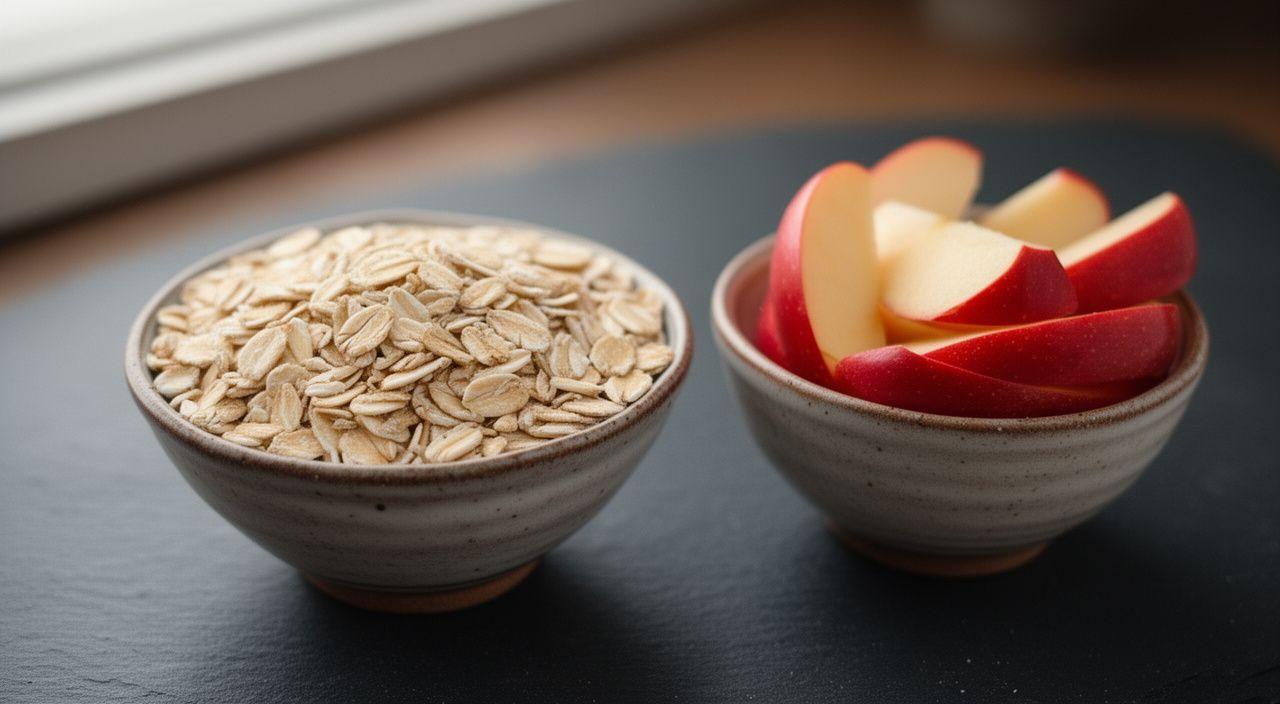
Dietary fiber comes in two main forms—soluble and insoluble—and both play distinct, essential roles in your digestive system and overall health. Soluble fiber dissolves in water to form a gel that helps manage blood sugar and cholesterol, while insoluble fiber adds bulk to stool to keep bowel movements regular.
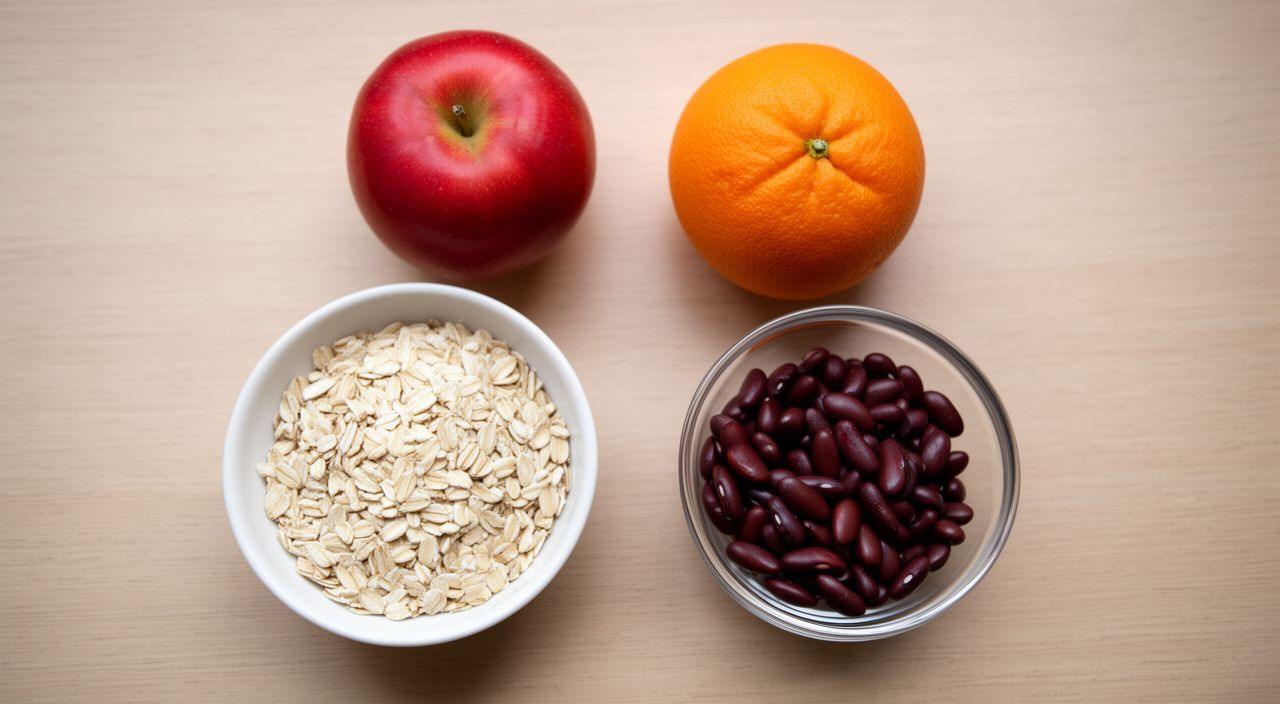
UCSF Health explains that water-soluble fibers absorb water during digestion, which can decrease blood cholesterol levels and increase stool bulk. You can find soluble fiber in fruits like apples and oranges, vegetables, legumes, barley, and oats. On the other hand, water-insoluble fibers remain unchanged during digestion to promote the normal movement of intestinal contents. Healthline highlights that insoluble fiber includes plant cellulose, hemicellulose, and lignin, commonly found in fruits with edible peels, whole grain products, bulgur wheat, and brown rice. Most plant foods contain a mix of both, so eating a colorful variety ensures you get the full spectrum of benefits.
Which Foods Provide the Most Fiber?
The best sources of dietary fiber are whole plant foods like legumes, whole grains, fruits, vegetables, nuts, and seeds, which provide far more nutritional value than isolated supplements. Building your meals around these natural sources helps you reach your daily goals while delivering essential vitamins and minerals.
The Harvard T.H. Chan School of Public Health emphasizes that whole foods should be the primary source of dietary fiber rather than relying on supplements. Professor Eric Rimm suggests that people focus on adding more fiber-rich foods to their diets rather than trying to track daily amounts obsessively. To help you visualize these sources, here is a breakdown of common high-fiber foods based on Mayo Clinic data:
| Food Category | Food Item | Serving Size | Total Fiber |
|---|---|---|---|
| Legumes | Split peas, boiled | 1 cup | 16.0 g |
| Legumes | Lentils, boiled | 1 cup | 15.5 g |
| Legumes | Black beans, boiled | 1 cup | 15.0 g |
| Seeds | Chia seeds | 1 ounce | 10.0 g |
| Vegetables | Green peas, boiled | 1 cup | 9.0 g |
| Fruits | Raspberries | 1 cup | 8.0 g |
| Grains | Spaghetti, whole-wheat | 1 cup | 6.0 g |
| Fruits | Pear, medium | 1 medium | 5.5 g |
How Can You Eat 30 Grams of Fiber in a Day?
AI illustration · Peachy Healthy
Reaching your daily fiber target is entirely achievable by making simple, strategic swaps at each meal, such as choosing whole grains over refined grains and keeping the skins on your potatoes. A single day of mindful eating can easily provide the 30 grams needed to support your gut health and keep you feeling full.
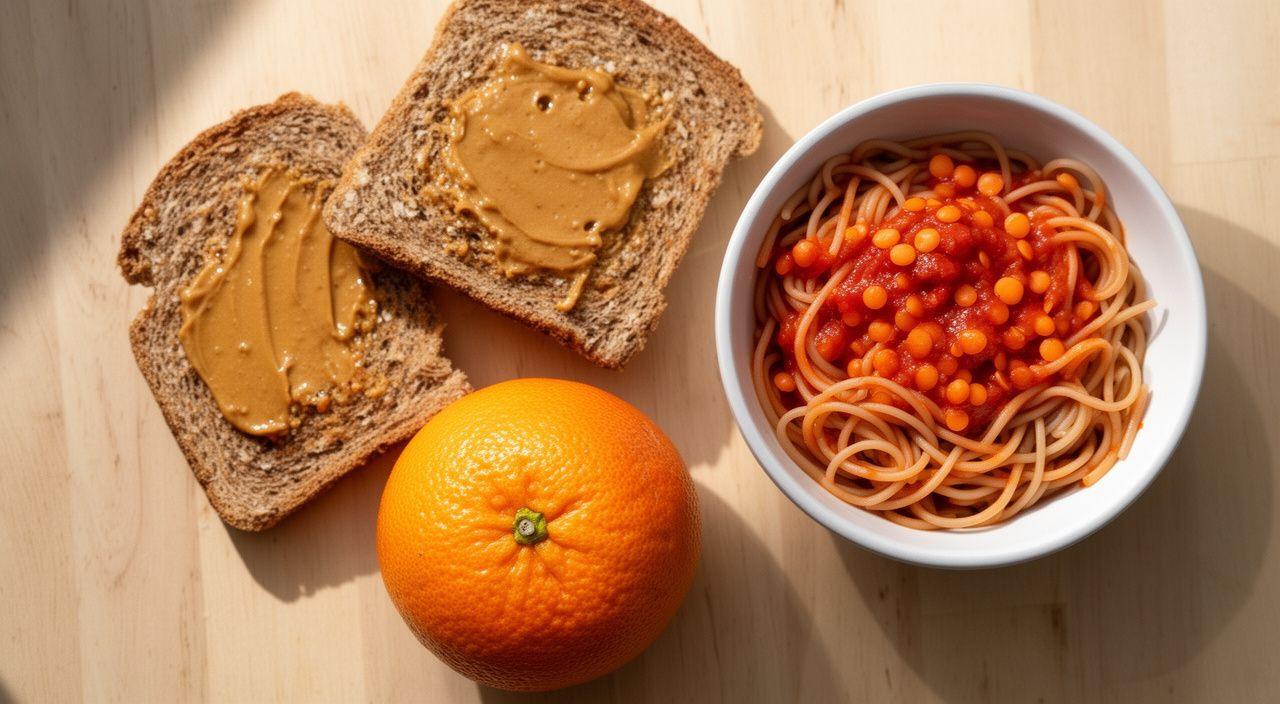
The NHS provides a practical example of what a high-fiber day looks like. For breakfast, two slices of wholemeal toast with peanut butter and a medium orange provide around 8.3 grams of fiber. A lunch of wholemeal spaghetti with lentil and tomato sauce delivers approximately 11 grams. Finally, a dinner of grilled chicken breast, a skin-on baked potato, carrots, and green beans adds about 11.2 grams. This brings the daily total to roughly 30.5 grams without requiring any special supplements. To build on this foundation, be sure to read our guides on gut health and hidden sugars to understand how your overall diet impacts your digestive system.
How Do You Increase Fiber Without Bloating?
The most effective way to add more fiber to your diet without experiencing uncomfortable bloating or gas is to increase your intake gradually while simultaneously drinking plenty of water. Rushing the process or eating fiber without adequate hydration can lead to digestive distress and constipation.
"The key is to increase fiber gradually, drink plenty of water and get fiber naturally from a mix of fruits, vegetables, beans and whole grains." — Jeanna Brouwer, dietitian at OSF HealthCare
This gradual approach allows your digestive system to adjust to the new workload. Furthermore, Eatright.org explains that dietary fiber behaves similarly to a sponge in your digestive tract, meaning it needs water to plump up and pass smoothly. If you consume more fiber but not enough fluid, you may experience nausea or constipation. If you experience persistent digestive issues when changing your diet, it is always a good idea to consult your doctor.
Frequently asked questions
How can I hit 25g of fiber a day?
You can easily reach 25 grams by combining a few high-fiber foods throughout the day, such as having a cup of raspberries for a snack, half a cup of black beans in your lunch salad, and a medium apple with the skin for breakfast. Adding a serving of whole-grain bread will quickly push you over the threshold.
What does 30g of fiber look like in a day?
A 30-gram fiber day typically includes a bowl of oatmeal with chia seeds for breakfast, a whole-wheat wrap filled with beans and vegetables for lunch, and a dinner featuring brown rice, lentils, and a side of broccoli. Combining wholemeal toast, lentil pasta, and a baked potato with skin naturally totals over 30 grams.
What is the highest fiber food?
Among common everyday foods, boiled split peas top the chart with 16 grams of fiber per cup, closely followed by boiled lentils at 15.5 grams and black beans at 15 grams per cup. Chia seeds are also incredibly dense in fiber, offering 10 grams in just a single ounce.
Is 1 apple a day enough fiber?
While one medium apple with the skin provides a healthy 4.5 grams of fiber, it is not enough to meet the daily target of 25 to 38 grams on its own. Additionally, processing the apple changes its fiber content significantly; for instance, half a cup of unsweetened applesauce contains 1.3 grams of fiber.
Related articles