For most healthy adults, a daily total fluid intake of about 11.5 cups (2.7 liters) for women and 15.5 cups (3.7 liters) for men is adequate to maintain optimal health. This guide breaks down how to calculate your personal hydration needs, explains the biological mechanisms behind water intake, and shares practical, evidence-based tips to build a sustainable daily habit.
Why does your body need so much water?
Water makes up 50% to 65% of your body weight, acting as the primary medium for nearly every biological process. At a cellular level, most of your body’s water is divided into intracellular (inside cells) and extracellular (outside cells) compartments. Fluid moves freely between these areas through osmosis, balancing water levels across cell membranes to keep tissues hydrated and functional.
Beyond basic cellular function, water performs critical daily jobs. According to Harvard Medical School, water is responsible for "carrying nutrients and oxygen to your cells" and "cushioning joints". Furthermore, blood is more than 90 percent water, which allows it to efficiently deliver oxygen throughout the body and maintain normal blood pressure. Proper hydration also supports the skin barrier and cushions sensitive tissues like the brain and spinal cord.
When you do not replace the water you lose through sweat, breathing, and digestion, the body struggles.
"Even mild dehydration can make you feel as if you have less energy and make it harder to think clearly." — Mayo Clinic
How much total fluid should you drink each day?
You have likely heard the rule to drink eight 8-ounce glasses of water daily. However, there are no federal guidelines for a specific amount of plain water because individual needs vary widely based on body size, physical activity, climate, and diet.
Instead of focusing solely on plain water, health authorities look at total fluid intake, which includes all beverages and the water found in food. The U.S. National Academies of Sciences, Engineering, and Medicine suggests that an average daily total fluid intake of 15.5 cups for men and 11.5 cups for women is sufficient for most people.
To help visualize how this breaks down in practice, here is a comparison of total fluid targets and estimated plain water needs:
| Demographic | Total Daily Fluid Target | Estimated Plain Water Needed |
|---|---|---|
| Adult Men | ~15.5 cups (3.7 liters) | 4 to 6 cups (if eating a water-rich diet) |
| Adult Women | ~11.5 cups (2.7 liters) | 4 to 6 cups (if eating a water-rich diet) |
Note: These targets include fluids from all sources. If you consume plenty of fruits, vegetables, and other beverages, your actual plain water intake can be lower.
Your baseline needs will increase if you exercise regularly, live in a hot climate, or are unwell. Conversely, if you have certain health conditions like “kidney or heart disease, you may actually need to limit your intake”, so always consult your doctor for personalized advice.
How can you tell if you are drinking enough?
Tracking exact ounces can feel like a chore, but your body provides built-in indicators to help you gauge your hydration status.
The simplest and most reliable method is to listen to your body. "In most cases, you are safe drinking to thirst", as the thirst mechanism is highly effective for healthy individuals.
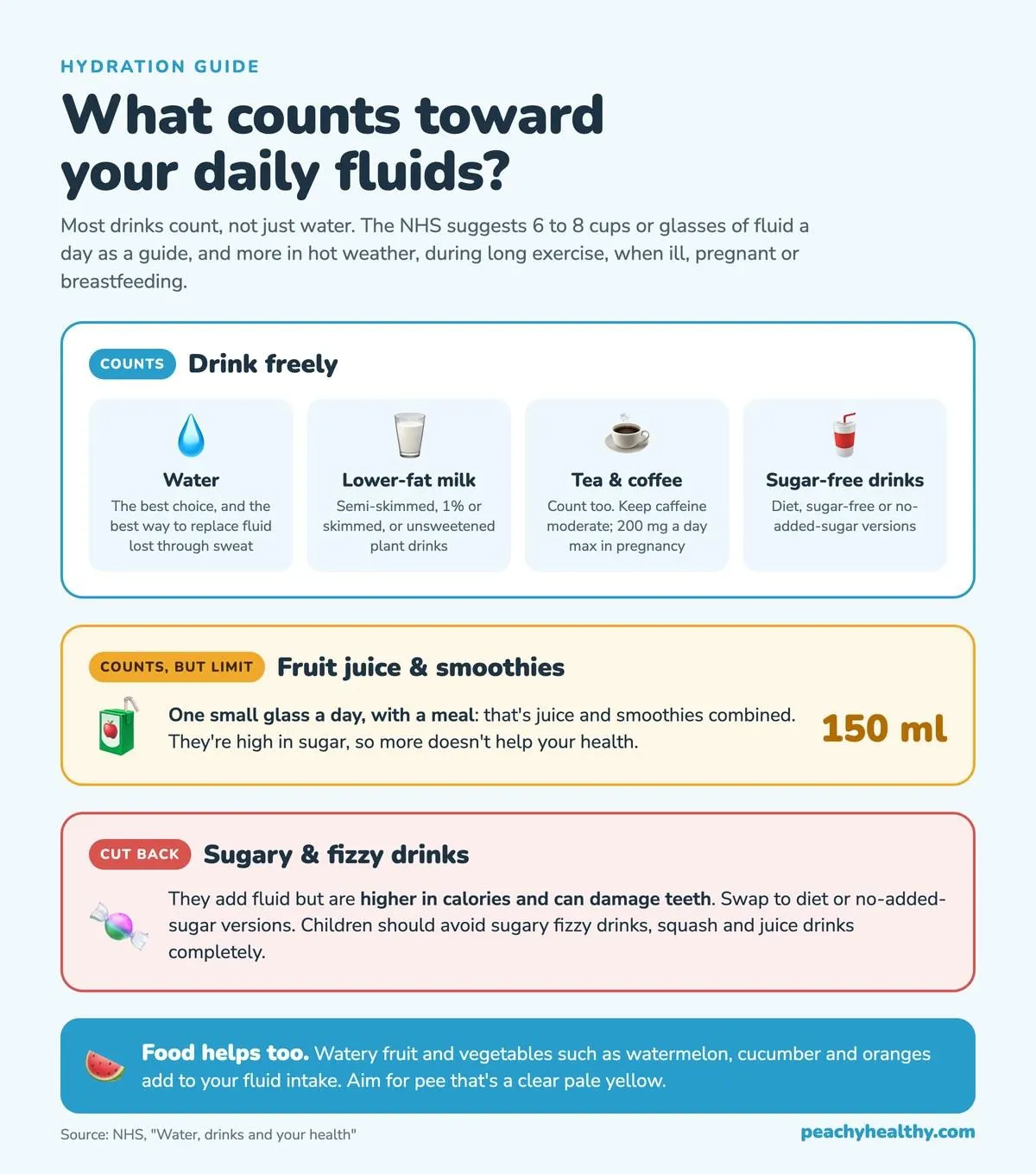
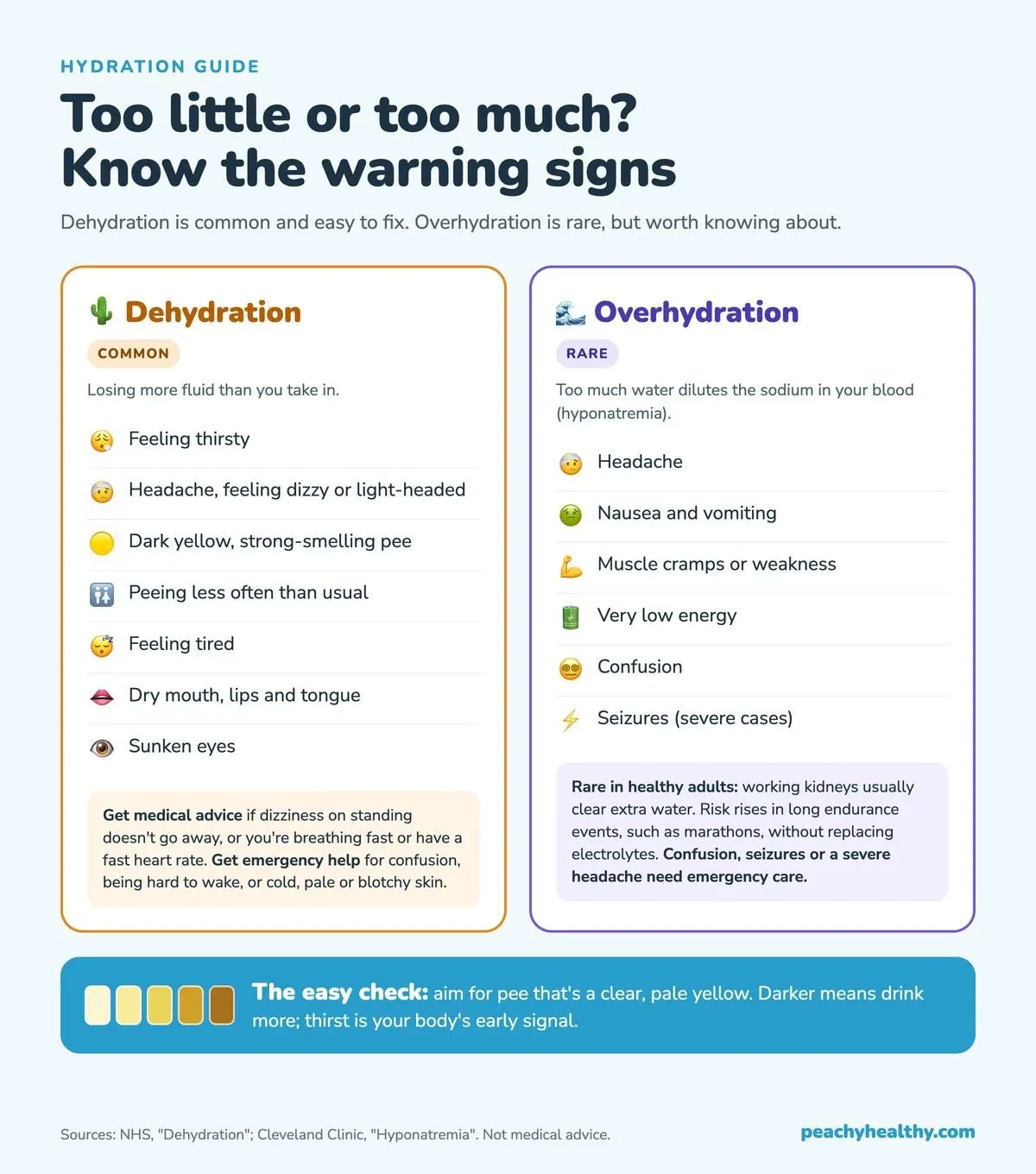
You can also monitor your urine color. Pale, straw-colored urine generally indicates good hydration, while dark yellow or strong-smelling urine suggests you need to drink more. Other physical signs of mild dehydration include dry mouth, fatigue, dizziness, and difficulty concentrating.
Despite these natural cues, many adults still fall short. A national survey analyzed by the CDC found that “7% of adults reported no daily consumption of drinking water”. The data showed that low water intake was significantly higher among older adults, those who did not exercise, and people who consumed fewer fruits and vegetables. The likelihood of drinking less than 4 cups of water daily was also higher among residents of the Northeast compared to the South.
What are the best ways to build a hydration habit?
Making hydration a consistent part of your day does not require forcing down large volumes of plain water. Small, strategic adjustments to your routine can keep your fluid levels balanced without feeling like a chore.
- Eat your water: About 20% of daily fluid intake typically comes from food. Fruits and vegetables like cucumbers, watermelon, and strawberries are excellent, nutrient-dense ways to boost hydration.
- Rethink your beverages: While coffee and tea contribute to your daily fluid total, the NHS recommends you drink caffeine in moderation. Additionally, it is wise to “limit fruit juice and smoothies to a maximum of one small glass (150ml) a day” to avoid excess sugar.
- Enhance the flavor: If you find plain water unappealing, you do not have to suffer through it. Try sparkling water, or add a slice of lemon, lime, or mint to make it more enjoyable.
- Anchor it to existing habits: Drink a glass of water when you wake up, keep a reusable bottle at your desk, or have a cup with every meal. Tying hydration to an existing routine makes it automatic.
Your Daily Hydration Checklist
Use this quick-reference summary to ensure your daily habits support optimal fluid balance:
- Aim for total fluids: Target roughly 11.5 cups (women) or 15.5 cups (men) from all food and drink.
- Check your color: Aim for pale yellow urine throughout the day.
- Drink to thirst: Let your body’s natural signals guide your plain water intake.
- Eat water-rich foods: Include at least one serving of high-water fruits or vegetables with your meals.
- Adjust for activity: Add an extra glass or two for every 30 minutes of sweaty exercise.
Frequently asked questions
Is 64 ounces of water a day enough?
The "8×8 rule" (eight 8-ounce glasses, totaling 64 ounces) is a popular baseline, but it is not a strict scientific requirement. For many healthy adults eating a balanced diet, 64 ounces of plain water is perfectly adequate, as the remainder of their daily fluid needs is met through food and other beverages. However, highly active individuals or those in hot climates may need more.
Is drinking a gallon of water a day too much?
For most healthy people, drinking a gallon (128 ounces) a day is unnecessary and can, in rare cases, lead to overhydration, where the sodium in your blood drops too low. Unless directed by a healthcare provider for a specific medical reason, it is generally best to drink to thirst rather than forcing excessive volumes.
Does coffee or tea count toward my daily water intake?
Yes, caffeinated beverages like coffee and tea do count toward your total daily fluid intake. While caffeine has a mild diuretic effect, the water in these drinks more than compensates for the fluid lost. Just be mindful of added sugars and cream, and try to keep your overall caffeine consumption in moderation.